
Despite decades of warnings and asbestos bans in many countries, lung cancer and other asbestos-related diseases continue to claim lives at alarming rates. New global data shows a troubling reality: even as asbestos use declines, deaths linked to past exposure are still increasing.
This isn’t a contradiction. It’s the long shadow of asbestos — and it helps explain why families are still facing devastating diagnoses today.
What the Data Shows
According to recent global estimates compiled by the World Health Organization and the International Labour Organization, occupational exposure to asbestos causes more than 200,000 deaths worldwide each year.
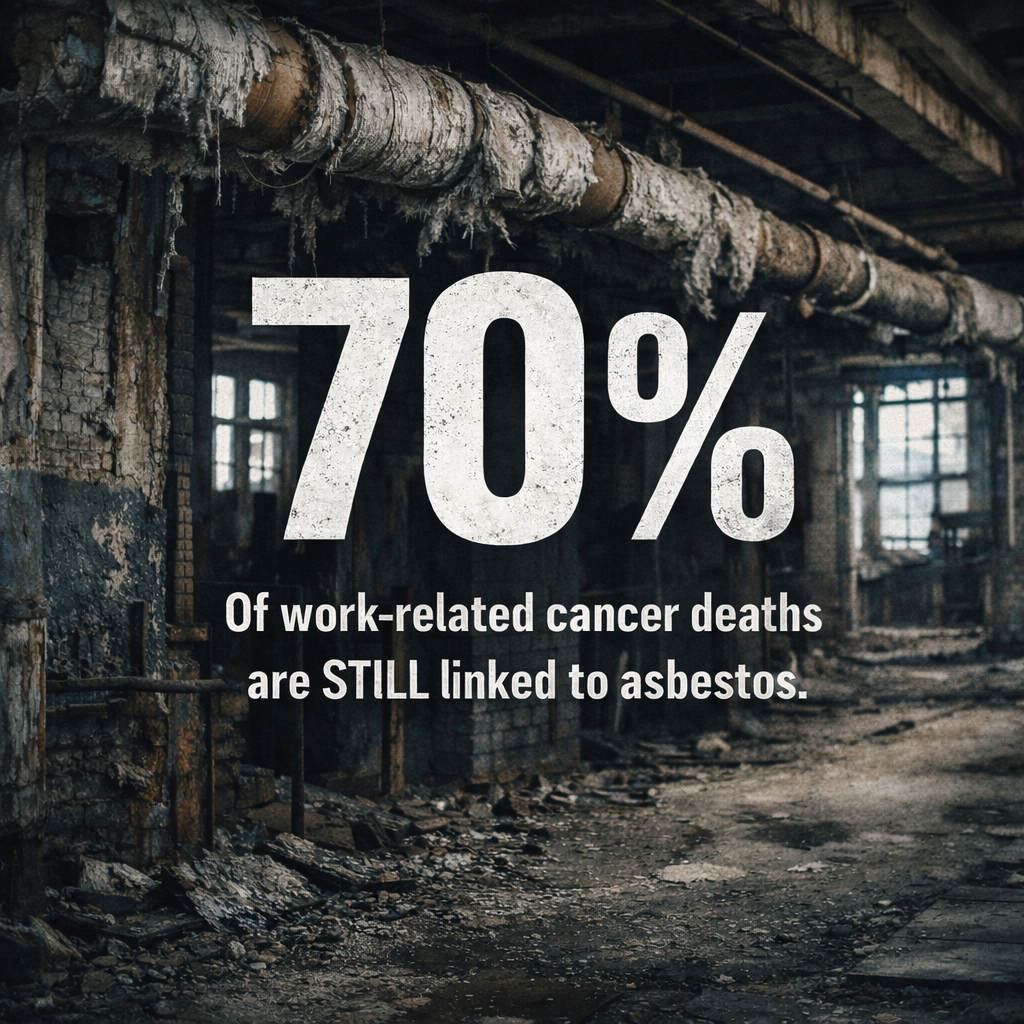
That figure represents over 70% of all deaths from work-related cancers. Lung cancer accounts for a significant portion of those deaths, alongside mesothelioma and other asbestos-related diseases.
Researchers estimate that asbestos exposure also results in nearly 4 million disability-adjusted life years (DALYs) lost annually — a measure that reflects both early death and years lived with serious illness.
These numbers are not projections. They are based on global data analyzing exposure patterns and disease outcomes, with estimates most recently calculated using 2016 data and published in peer-reviewed research in 2023.
If Asbestos Is Banned, Why Are Deaths Still Rising?
More than 50 countries have banned asbestos, including many industrialized nations. So why does asbestos-related lung cancer continue to rise?
The answer lies in latency.
Asbestos-related diseases often take 20 to 50 years to develop after exposure. That means:
- Workers exposed in the 1970s, 1980s, and 1990s are being diagnosed today
- Families exposed secondhand may not show symptoms for decades
- Disease trends reflect past exposure, not current regulations
In other words, today’s rising death rates are the result of yesterday’s asbestos use.
Construction Workers Remain at High Risk
A major focus of the recent research is the construction industry. A systematic review conducted for the WHO/ILO Joint Estimates found that a substantial proportion of manual construction workers worldwide are still exposed to asbestos.
Even in countries where new asbestos use is banned, exposure continues during:
- Building renovation
- Maintenance work
- Demolition of older structures
- Disaster-related damage to buildings
Asbestos-containing materials are still present in countless older schools, homes, shipyards, refineries, and industrial facilities. When those materials are disturbed, fibers can become airborne — creating risk decades after installation.
Lung Cancer and Asbestos: A Deadly Link
Asbestos is a confirmed human carcinogen. Exposure is known to cause:
- Lung cancer
- Mesothelioma
- Cancers of the larynx and ovaries
- Chronic respiratory diseases such as asbestosis
The data also shows that smoking and asbestos exposure together dramatically increase lung cancer risk. The heavier the smoking history, the greater the danger — but asbestos alone is enough to cause disease.
This matters because many workers were never warned about asbestos risks, never provided protective equipment, and never told that exposure could follow them for life.
Exposure Doesn’t Stop at the Jobsite
Not all asbestos exposure happens at work.
Fibers can be carried home on:
- Work clothes
- Shoes
- Hair
- Tools
Spouses and children may inhale those fibers without ever setting foot on a jobsite. Studies and surveillance data have repeatedly shown that secondary (family) exposure can be just as dangerous as occupational exposure.
Why Awareness Still Matters
The WHO has been clear: the most effective way to eliminate asbestos-related diseases is to stop using asbestos entirely and prevent exposure where asbestos is already in place.
But bans alone are not enough.
Because asbestos remains in older buildings and infrastructure, long-term efforts are still needed, including:
- Worker protection during maintenance and removal
- Proper handling of asbestos-containing waste
- Medical surveillance for exposed workers
- Public awareness of ongoing risks
Without these measures, asbestos-related lung cancer deaths will continue — even generations after bans are enacted.
What This Means for Families Today
For many families, a lung cancer diagnosis comes with unanswered questions:
- Why now?
- Where did this come from?
- Could past work or family exposure be involved?
Global health data confirms what many families are learning the hard way: asbestos exposure is not just a problem of the past. Its effects are unfolding right now.
Understanding that history can be an important step toward clarity, accountability, and informed decisions about what comes next.
Data sources: Global mortality and exposure estimates referenced in this article are drawn from the World Health Organization and International Labour Organization Joint Estimates of the Work-related Burden of Disease, including a 2023 systematic review published in Environment International.
If you or a loved one has been diagnosed with lung cancer or another asbestos-related disease in Louisiana, you don’t have to navigate this alone.
Call us today at (504) 299-1214 for a free consultation, or fill out our online form to get started.